

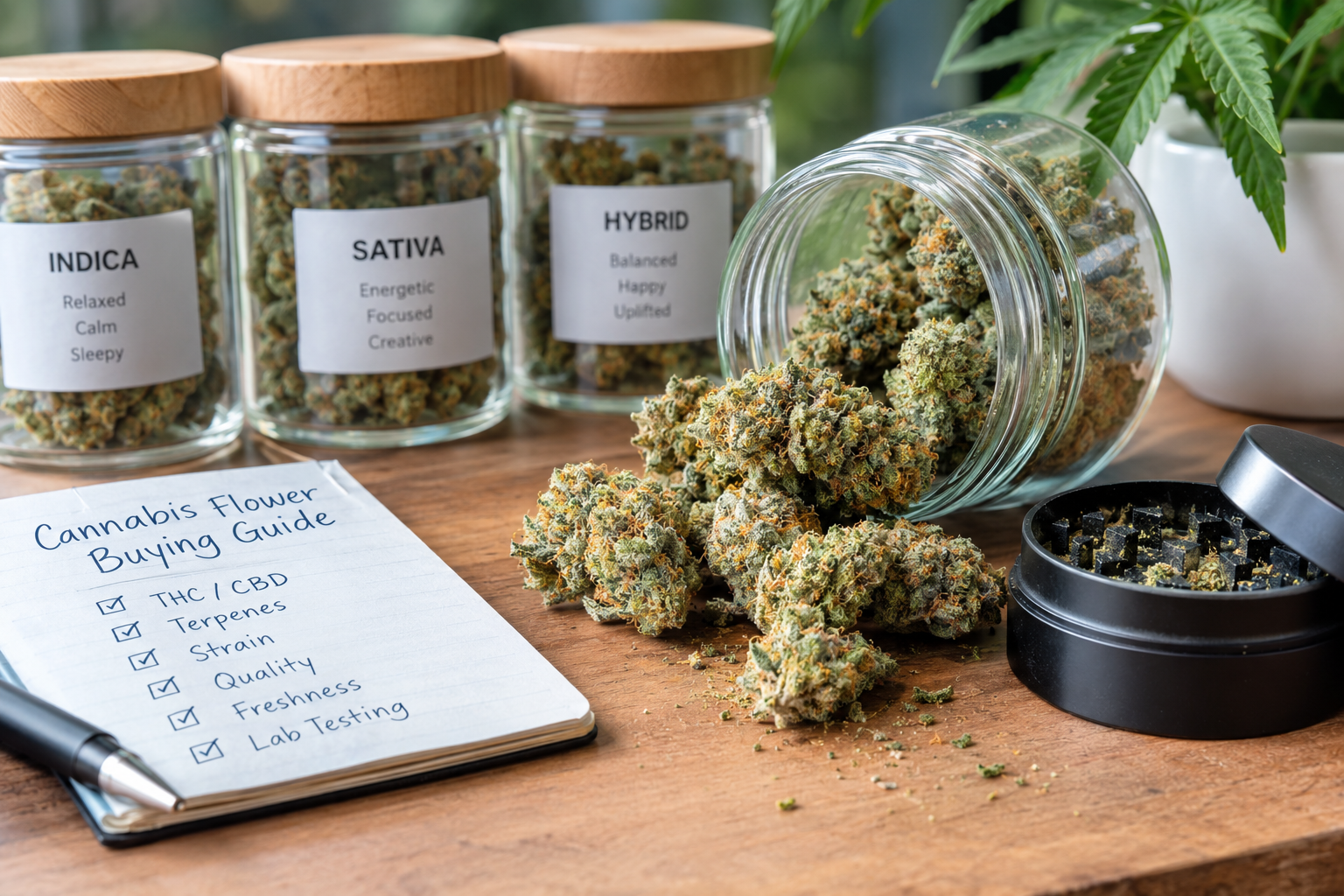
Choosing cannabis flower for the first time can be confusing. Walk into a dispensary or browse a cannabis catalog and you may see dozens of strains, THC percentages, terpene profiles, cultivation methods, and product descriptions.
If you’re new to cannabis, it is easy to assume that the product with the highest THC percentage or the most impressive name must be the right choice. In reality, choosing cannabis flower involves looking at several factors together, including cannabinoid content, terpene profile, freshness, appearance, testing information, and your own preferences.
This cannabis flower buying guide for beginners explains what to look for, how to understand product labels, and which factors can help you compare different cannabis flower products more confidently.
Important: Cannabis laws and product regulations differ by state and jurisdiction. Always follow the laws that apply to your location and the age or eligibility requirements for cannabis products.
What Is Cannabis Flower?
Cannabis flower is the flowering part of the cannabis plant and is commonly referred to as bud. It contains naturally occurring cannabinoids such as THC and CBD, along with numerous other compounds.
According to the CDC, cannabis contains more than 100 cannabinoids, including THC, which is intoxicating, and CBD, which does not produce a high by itself.
The characteristics of cannabis flower can vary significantly from one cultivar to another. Differences may include:
- THC and CBD content
- Terpene profile
- Aroma and flavor
- Flower structure
- Trichome coverage
- Cultivation method
- Harvest and packaging information
- Testing results
Understanding these differences is the first step toward making a more informed comparison.
How to Choose Cannabis Flower
There is no single characteristic that determines whether cannabis flower is right for you. Instead, consider the complete product profile.
Here are the most important factors to examine.
Start With the Cannabinoid Profile
When people compare cannabis flowers, THC percentage is often the first number they notice.
THC, or tetrahydrocannabinol, is the cannabinoid primarily associated with the intoxicating effects of cannabis. CBD, or cannabidiol, is another naturally occurring cannabinoid that does not produce a high by itself.
However, THC percentage should not be treated as a simple quality score.
Two cannabis flower products can have similar THC levels while having very different terpene profiles, aromas, cultivation characteristics, and overall compositions.
When comparing products, look at:
- THC content
- CBD content
- Other cannabinoids listed on the label
- Total cannabinoid information
- Terpene information
- Testing information
A complete cannabinoid profile provides more context than focusing on THC alone.
Understand THC Levels in Cannabis Flower
THC levels can vary considerably between cannabis flower products. For beginners, it is useful to understand what the percentage actually represents rather than automatically searching for the highest available number.
A higher THC percentage does not necessarily mean higher overall product quality. Cannabis is a complex plant containing numerous cannabinoids and other compounds.
When evaluating cannabis potency, consider the product’s complete label and follow applicable product instructions and legal requirements.
The CDC notes that cannabis effects can vary depending on multiple factors, including the person and the product.
Don’t make THC the only deciding factor
Instead of asking:
“Which cannabis flower has the highest THC?”
consider:
“What does the complete product profile tell me?”
That shift can help beginners compare products more thoughtfully.
Learn About Cannabis Terpenes
If THC is one of the most discussed cannabis compounds, terpenes are another important part of the conversation.
Terpenes are aromatic compounds found in cannabis and many other plants. They contribute to the characteristic smell and flavor of different cannabis flowers.
Some commonly discussed cannabis terpenes include:
- Myrcene
- Limonene
- Caryophyllene
- Pinene
- Linalool
- Humulene
Different combinations can contribute to profiles described as:
- Citrus
- Fruity
- Earthy
- Floral
- Herbal
- Pine-like
- Spicy
- Woody
For consumers comparing quality cannabis flowers, the terpene profile can provide useful information about the product’s aroma and flavor characteristics.
However, terpene names should not be treated as guarantees of a particular medical outcome. Scientific research into the complex interactions between cannabis compounds is ongoing.
Understand Cannabis Strains and Cultivars
Another common part of cannabis shopping is choosing between different cannabis strains.
You may encounter terms such as:
- Indica
- Sativa
- Hybrid
These terms are commonly used in the cannabis marketplace, but they do not provide a complete description of a product’s chemical composition.
Two products carrying the same broad classification can have substantially different cannabinoid and terpene profiles.
For that reason, look beyond the strain name.
When comparing cannabis strains, consider:
- Cannabinoid profile
- THC level
- CBD level
- Terpene profile
- Aroma
- Product description
- Testing information
- Cultivation and processing information where available
This gives you a more detailed picture of the flower you’re considering.
Look at the Appearance of Cannabis Flower
Appearance is another factor consumers commonly consider when evaluating cannabis flowers.
While appearance alone cannot establish the safety or quality of a product, it can help you understand some of its physical characteristics.
Trichomes
Trichomes are tiny structures found on the surface of cannabis flowers. They are associated with the production and storage of cannabinoids and terpenes.
A flower with visible trichome coverage may have a noticeably frosty appearance.
Color
Cannabis flowers can naturally appear in different shades of green, with variations influenced by genetics and cultivation conditions.
Structure
Different cultivars can produce flowers with different shapes, sizes, and densities.
Trim
The way a flower is trimmed can also affect its appearance.
Remember that attractive appearance is not enough to establish product quality. Testing, labeling, handling, and storage information are also important.
Check the Freshness of Cannabis Flower
Freshness is an important consideration when choosing cannabis flowers.
Cannabis flowers can change over time, particularly when exposed to unsuitable levels of heat, light, air, or moisture.
When product information is available, pay attention to:
- Packaging date
- Harvest information
- Storage information
- Packaging condition
- Product aroma
- Texture
Proper packaging and storage can help protect the product’s characteristics.
For consumers comparing several cannabis flower products, freshness can be a useful factor alongside potency, terpene profile, and testing information.
Read the Cannabis Product Label
A product label can tell you much more than the product name.
Depending on the jurisdiction and product, cannabis packaging may provide information about:
- THC
- CBD
- Total cannabinoids
- Ingredients
- Batch information
- Testing
- Packaging date
- Manufacturer or processor
- Required warnings
- Product quantity
Take the time to read the entire label instead of relying solely on a product title or marketing description. The FDA has raised concerns about the quality and labeling of some cannabis-derived and CBD products, including situations where tested contents did not match claimed amounts. That makes transparent product information especially important.
Look for Testing and Product Information
For consumers, cannabis testing can provide valuable information about a product’s cannabinoid content and, where applicable, testing for contaminants.
Where regulated testing and certificates of analysis are available, review the information provided with the product. A reliable product listing should make important information easy to understand rather than relying entirely on promotional language.
When comparing cannabis flowers online or in a regulated retail environment, look for clear information about the product and its testing requirements in your jurisdiction.
Don’t Assume the Highest THC Means the Best Cannabis Flower
One of the biggest misconceptions among beginners is that the highest THC percentage automatically represents the best cannabis flower. It doesn’t. THC is an important cannabinoid, but it is only one part of the overall product profile.
For example, you may find two cannabis flower products with comparable THC levels but noticeably different:
- Terpene profiles
- Aromas
- CBD content
- Appearance
- Freshness
- Cultivation characteristics
- Testing information
Instead of judging cannabis flowers by THC alone, consider the complete set of available information.
Consider Aroma and Flavor Preferences
Aroma can be a useful way to differentiate cannabis flower products.
Depending on their terpene composition, flowers may have aromas described as:
Citrusy: Lemon, orange, or other citrus notes.
Fruity: Berry, tropical, or sweet fruit characteristics.
Earthy: Soil-like, herbal, or woody notes.
Floral: Flower-like or delicate aromas.
Piney: Fresh, forest-like characteristics.
Spicy: Peppery or warm aromatic notes.
Your preferred aroma can help narrow down the types of cannabis flower you may want to explore.
Consider How the Flower Was Produced
Cannabis flowers can be produced using different cultivation approaches.
Product descriptions may refer to characteristics such as:
- Indoor-grown
- Outdoor-grown
- Greenhouse-grown
- Organic-style cultivation
- Hydroponic cultivation
These descriptions can provide additional context, but cultivation method alone does not determine whether a product is right for you.
Instead, consider cultivation information alongside the cannabinoid profile, terpene content, testing information, freshness, and overall product quality.
Cannabis Flower for Beginners: What Should You Look For?
If you’re completely new to cannabis flower, keep your checklist simple.
Beginner Cannabis Flower Checklist
1. Check the THC and CBD information
Understand the cannabinoid content before making a comparison.
2. Review the terpene profile
Look for aroma and flavor characteristics you prefer.
3. Read the complete label
Don’t rely only on the product name.
4. Check testing information
Look for appropriate testing documentation where available.
5. Consider freshness
Review packaging and freshness information when provided.
6. Compare the entire product profile
Don’t make your decision based solely on THC percentage.
7. Verify local regulations
Cannabis rules differ across states and jurisdictions.
Common Mistakes When Choosing Cannabis Flower
Choosing Only by THC Percentage: High THC can attract attention, but it isn’t a complete measure of product quality.
Ignoring Terpenes: Terpenes contribute to aroma and flavor and can help differentiate products.
Relying Only on Strain Names: The same broad strain category can include products with different chemical profiles.
Ignoring Product Testing: Testing information can provide useful insight into cannabinoid content and applicable quality controls.
Buying Without Checking Local Laws: Cannabis regulations vary by state, including rules related to medical use, adult use, possession, retail sales, products, labeling, and testing. NCSL’s current database tracks enacted state cannabis legislation across these areas.
Believing Unverified Health Claims
Cannabis and CBD products are sometimes promoted with health claims that are not supported by adequate evidence. The FDA specifically warns consumers about unapproved products marketed with unproven therapeutic claims.
How to Compare Different Cannabis Flower Products
A simple comparison can make your decision easier.
| Factor | What to Check |
| THC | Listed THC concentration |
| CBD | CBD concentration where provided |
| Terpenes | Aroma and flavor profile |
| Strain/Cultivar | Product identity and characteristics |
| Freshness | Packaging or harvest information |
| Appearance | Color, structure and trichomes |
| Testing | Available laboratory/testing information |
| Label | Complete product information |
| Cultivation | Indoor, outdoor or greenhouse information |
| Legal Status | Applicable local requirements |
This approach gives beginners a practical framework for comparing cannabis flowers without relying on one marketing claim.
Is a More Expensive Cannabis Flower Always Better?
Not necessarily. Price can be influenced by many factors, including cultivation methods, production costs, packaging, market conditions, brand positioning, and local regulations. A higher price does not automatically guarantee a better product. Likewise, a lower price does not automatically mean poor quality.
Instead of judging cannabis flower exclusively by price, compare the information available about its cannabinoid profile, terpene profile, freshness, testing, and overall product specifications.
Frequently Asked Questions About Cannabis Flower
What is the best cannabis flower for beginners?
There isn’t one universally best cannabis flower for every beginner. Product characteristics vary, so beginners should compare cannabinoid content, terpene profile, labeling, freshness, and testing information rather than relying on a single factor.
What should I look for when buying cannabis flower?
Start with the product label. Check THC and CBD content, terpene information, testing details, freshness information, and the product’s specific characteristics.
Is higher THC better?
Not necessarily. THC is only one component of cannabis flower. A higher THC percentage does not automatically mean better overall quality.
What are terpenes in cannabis?
Terpenes are aromatic compounds that contribute to the smell and flavor of cannabis flower. Different terpene profiles can produce different aromatic characteristics.
What are trichomes?
Trichomes are tiny structures on cannabis flowers associated with cannabinoids and terpenes. They can contribute to the flower’s characteristic frosty appearance.
What is the difference between indica, sativa and hybrid?
These are commonly used cannabis classifications, but they do not fully describe a product’s cannabinoid or terpene composition. Looking at the specific product profile can provide more useful information.
How should cannabis flowers be stored?
Follow the product’s storage instructions and keep cannabis in a secure location away from children and pets. Avoid unsuitable exposure to heat, light, air, and moisture.
Is cannabis legal everywhere in the United States?
No. Cannabis laws vary considerably by state and can change over time. NCSL maintains a current database of state cannabis legislation and regulations.
Final Thoughts
Choosing cannabis flowers becomes much easier once you know what information matters. Instead of focusing on a strain name, price, or THC percentage alone, take a broader look at the product. THC and CBD content, terpene profile, freshness, appearance, testing information, labeling, and cultivation details can all help you understand the flower you’re considering. For beginners, the most useful approach is simple: read the label, compare the complete product profile, understand potency, and choose products that comply with the laws and requirements in your location. As you explore different cannabis flower products, keeping track of the characteristics you prefer can also help you make more informed comparisons in the future.